


Affect: Addiction Recovery
4.51.28K Reviews
App Specs
- Version
- 5.9.0
- Updated On
- License
- Free
- Downloads
- 100,000+
- Developer
- Affect Therapeutics
- Categories
- Medical
- Platform
- Android, iOS
Screenshots
 Analysis by AppCompare
When recovery support has to fit around work, family, privacy, and difficult moments that do not arrive on schedule, an app can be easier to reach than a traditional appointment. I spent time looking at Affect: Addiction Recovery as a decision rather than a quick download: what kind of help does it offer, when is it most useful, and when would another form of care make more sense? My overall impression is that it is best understood as a structured treatment companion for people working on alcohol or drug addiction, not as a casual wellness tracker.
Affect is a free medical app from Affect Therapeutics, intended for mature users. It is available for Android devices running Android 9 or later, and its current version is 5.9.0. The app has reached over one hundred thousand installs and holds a 4.5 average from around 3.7 thousand ratings, which suggests that it has found a meaningful audience without making popularity the main reason to choose it.
The important question is not whether an app can replace every part of recovery care. It cannot. The useful question is whether having a treatment program in an app gives you a practical layer of support that you are likely to use consistently. In my view, that depends on your need for professional structure, your comfort with digital communication, and the seriousness of the situation you are managing.
What I looked for before recommending it
I judged the app using four simple criteria. First, does it feel designed for addiction recovery rather than general motivation? Second, can it fit into an ordinary day when attention, energy, and privacy are limited? Third, does it encourage a realistic treatment process instead of promising an instant fix? Finally, is it clear when the app should be supplemented by urgent or in-person medical help?
Those criteria matter because recovery tools are often chosen at a vulnerable moment. A person may be tired of repeating the same cycle, worried about a relapse, or looking for help without immediately explaining everything to relatives or colleagues. An app has to reduce friction, but it also has to avoid making the user feel that a few taps are an adequate response to every level of risk.
The age rating of Mature 17+ is appropriate for the subject matter. This is not an entertainment product or a generic habit app with addiction-related keywords added around the edges. The focus is treatment for alcohol and drug addiction, so the emotional content and the decisions involved can be much more serious than those in ordinary self-improvement software.
I also think the developer matters here. Affect Therapeutics is presented as the developer, and the app’s identity is tied to a treatment program rather than a broad collection of unrelated health tools. That narrower purpose is valuable for someone who wants a dedicated recovery path, although it may feel too specialized for a person who only wants mood journaling, a sobriety counter, or occasional educational material.
Worth Reading Before You Choose

EA SPORTS FC Mobile 26 Is a Bigger Football Game, but It Takes Time

Flipboard Shows What News Apps Must Do Beyond the Feed

Switching to Android Auto Means Rethinking Your Driving Routine

Google Calendar Makes a Crowded Week Easier to Manage

Ludo King Makes the Most of the Minutes Between Plans

Baby Panda World Brings Quick Play to Modern Phones, but Its Game Library Feels Busy
Why the treatment focus changes the experience
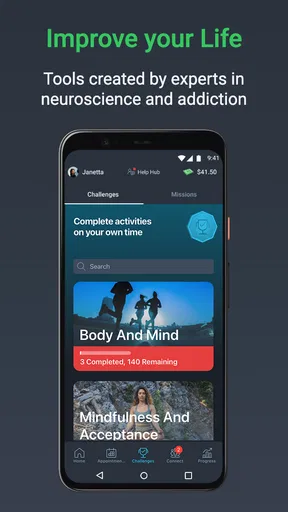
A sobriety counter mainly answers, “How long has it been?” A meditation app mainly helps you settle your attention. A general habit tracker mainly records whether you completed a task. Affect aims at a different problem: maintaining engagement with a recovery program while dealing with triggers, cravings, setbacks, and the practical need for continued support.
That distinction is one of the app’s strongest points. Counting days can be encouraging, but it does not automatically provide a plan for a difficult evening. A journal can help you notice patterns, but it does not necessarily create accountability. A treatment-focused app has a better chance of connecting daily actions with a larger recovery process.
At the same time, a focused treatment experience may ask more from you. If you only want a private counter that opens quickly and stays out of the way, the structure may feel heavier than necessary. I would not choose this app simply because I wanted a minimalist reminder. I would choose it because I wanted recovery support to be a central part of the tool.
How it fits into a normal day
The most realistic use case is not a dramatic crisis scene. It is an ordinary weekday when a familiar trigger appears. Imagine finishing a stressful shift, passing the place where you usually buy alcohol, and noticing that the urge is stronger than expected. In that moment, the value of a treatment app is not just information. It is having a defined next step instead of relying entirely on willpower.
I found it helpful to think of the app as something to open before the situation becomes overwhelming, not only after a lapse. A short check-in or treatment activity can function as a pause between the trigger and the usual reaction. That pause is easy to underestimate. It creates room to identify what is happening, remember the reason for seeking help, and choose a safer action while the urge is still manageable.
A practical routine would be to use it at a consistent time, such as after waking or before the evening begins, and then return to it when a high-risk situation develops. The routine matters more than trying to consume everything in one sitting. If you treat the app like homework that must be completed perfectly, it can become another source of pressure. If you treat it as a dependable checkpoint, it is easier to keep using.
One non-obvious advantage of this approach is that it can help you notice the difference between a craving and a plan. A craving may be intense but temporary; a plan includes the next action, the place, and the excuse you are already preparing to use. Recording or considering that distinction early can make a trigger easier to interrupt. I would use the app to build that awareness, not to prove that difficult feelings have disappeared.
Where Affect is more useful than a basic tracker
The clearest strength is its treatment identity. Someone who has already tried a counter, a motivational quote feed, or a generic wellness routine may appreciate having a tool aimed directly at addiction recovery. The app is also more suitable for people who want an ongoing program rather than a single feature they check once a day.
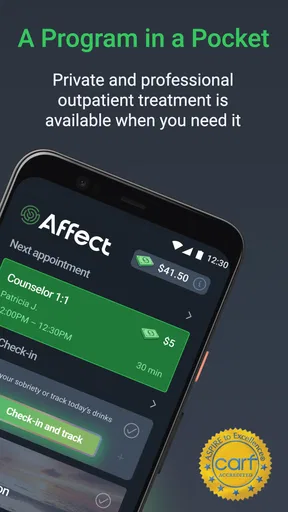
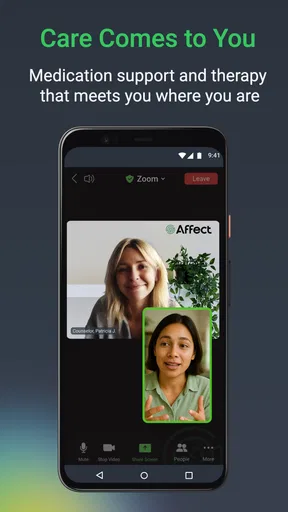
It can be particularly useful for a person who is willing to engage with guidance but struggles to attend every traditional appointment at convenient times. Digital access may make it easier to keep recovery in view during travel, irregular work, or a busy home schedule. That does not make an app equivalent to a clinic, but it can make support more reachable between other forms of care.
Another advantage is psychological: opening a dedicated recovery app can be less distracting than searching the wider internet whenever a question or urge appears. Search results can lead to conflicting advice, alarming stories, or content that is not appropriate for your situation. A focused environment gives the user a clearer place to begin.
There is also a useful trade-off in the app’s seriousness. Because it is a medical product for a mature audience, it does not need to pretend that recovery is a game. Some people respond well to badges, streaks, and cheerful reminders, but others find those elements uncomfortable when the subject is relapse or substance use. Affect’s treatment framing is more appropriate for users who want direct support rather than entertainment-style motivation.
What it cannot replace
I would not rely on Affect alone during a medical emergency, dangerous withdrawal, overdose risk, severe confusion, or a situation involving immediate danger. An app can support a recovery plan, but it is not the right substitute for emergency services, urgent medical assessment, or a clinician who can respond to rapidly changing symptoms.
This is especially important with alcohol and some drugs because stopping suddenly can be medically complicated for certain people. If you are physically dependent, have experienced serious withdrawal before, or are unsure whether stopping is safe, the sensible first step is professional medical advice. The app may still have a place in a broader plan, but the app should not be used to decide that urgent care is unnecessary.
I would also avoid treating a difficult day as a test that the app has failed if you relapse. Recovery is not measured by whether a tool prevents every setback. A relapse should be a reason to reconnect with appropriate support and review what happened, not a reason to hide the event or abandon treatment. The app is most useful when it helps you return to the process honestly.
Choosing between this app and other recovery options
I compare recovery apps with the support a person already has, not just with one another. A focused program can be more useful than a streak counter when cravings call for a next step, while scheduled human care may be the better fit when accountability or medical oversight is essential. The deciding question is what kind of support you can reliably reach; from there, it is easier to judge whether the app’s structure will remain useful over time.
When a sobriety counter may be the better choice
If your main need is a simple way to mark alcohol-free or drug-free days, a counter may be faster and less demanding. It can provide a visible milestone without asking you to work through a broader program. That is a reasonable choice for someone who already has professional support and only wants a small daily reminder.
The trade-off is that a counter usually offers less help with the moments that threaten the streak. It may tell you what you have achieved, but not necessarily what to do when an argument, payday, loneliness, or a familiar social setting creates pressure. I would choose a basic counter as an accessory, not as my only recovery resource when cravings are frequent or consequences have been serious.
When peer groups or in-person care may fit better
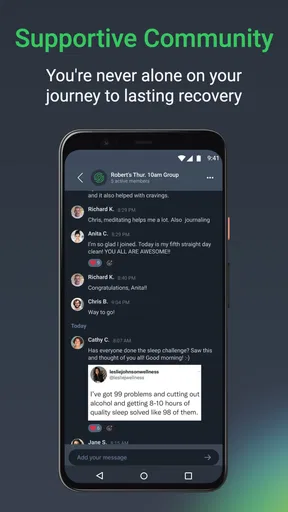
Some people recover best through regular contact with other people who understand their experience. A peer group can provide human recognition that an app cannot fully reproduce. In-person treatment can also make it easier for professionals to observe changes in mood, health, and behavior, while offering a level of accountability that a phone cannot guarantee.
Affect may suit someone who feels more comfortable beginning privately or who needs support between appointments. It may be less suitable for a person who knows they will ignore notifications, postpone every session, or withdraw when things become difficult. In that case, choosing a service with scheduled human contact may be wiser, even if it requires more travel and planning.
When therapy or a broader mental-health app is preferable
Addiction often overlaps with anxiety, depression, trauma, relationship conflict, sleep problems, or other health concerns. A dedicated recovery app can address the substance-use part of the picture, but it may not be enough when another condition is driving the cycle. If your main problem is a wider mental-health crisis, a licensed therapist, physician, or comprehensive care service may offer a better starting point.
General mental-health apps can be useful for meditation, journaling, or mood awareness, but they may not provide the addiction-specific direction you need. This is the central comparison: broader apps offer variety, while Affect offers a more defined purpose. I would rather use the focused option for addiction recovery and add other care when the surrounding issues require it than expect one general app to do everything.
Privacy, routine, and the cost of switching
Because the app deals with sensitive health information, I would install it only on a device I control and use a private moment for treatment activities. I would also avoid opening it in situations where someone nearby might read the screen or overhear a conversation. These are simple habits, but they matter when the subject is substance use.
The app itself is free, which lowers the financial barrier to trying it. The larger cost of switching is time and consistency. If you move from a counter to a structured treatment program, you may need to change your routine and give the new approach a fair chance before judging it. If you move away from Affect to a simpler tool, you may gain speed but lose the benefit of a dedicated process.
My advice is to decide what you are actually trying to solve before switching. If you keep missing a basic tracker because it feels too passive, a treatment-focused app may be a meaningful step up. If you already have a strong care plan and only need a discreet reminder, the additional structure may be unnecessary. The right choice is the one you will use at the exact times support matters.
Small workflow changes that improve its usefulness
I would begin by choosing one repeatable check-in window instead of opening the app randomly. Morning use can help set an intention before triggers appear; evening use can help review what made the day easier or harder. If your schedule changes often, attach the routine to a stable event such as brushing your teeth or finishing a meal.
Second, keep the app available before a high-risk period, not buried among dozens of unrelated apps. This is a minor phone-organization decision, but it reduces the number of steps between noticing a craving and seeking support. The goal is not to spend more time on the phone. The goal is to make the healthier action easier to start.
Third, use setbacks as information. After a difficult episode, consider what happened immediately beforehand: a person, place, emotion, time of day, or physical state. That review can reveal a repeatable pattern that a simple streak counter would miss. The insight is valuable only if it leads to a change, such as avoiding a particular route, contacting support earlier, or not facing a predictable trigger alone.
Finally, decide in advance who you will contact if the app is not enough. A recovery tool works better when it sits inside a real support network rather than carrying the whole responsibility. This is one of the most important trade-offs: digital access is convenient, but convenience should strengthen a care plan, not replace every person in it.
Who should try it and who should skip it
I recommend trying Affect if you want a dedicated medical recovery app, are ready to participate in a structured program, and need support that can travel with you through ordinary routines. It is a strong candidate for someone moving beyond a simple counter and looking for more purposeful engagement with alcohol or drug recovery.
I would skip it as a primary solution if you are seeking emergency help, need supervised withdrawal, or want only a lightweight streak display. I would also look elsewhere if you know that app-based treatment does not hold your attention or if your main concern is a separate mental-health condition that deserves direct clinical care.
For everyone else, I would approach it with realistic expectations. Downloading it is easy because it is free, but meaningful benefit comes from returning to the program and being honest about difficult moments. The mature rating is a reminder that this is serious subject matter, not a motivational game that can be completed and forgotten.
My final recommendation is cautiously positive. Affect: Addiction Recovery is worth considering when you want a focused treatment companion rather than a counter, quote feed, or general wellness app. Its strongest quality is the decision to center recovery from alcohol and drug addiction, while its main limitation is the same: that focus will not meet every medical, psychological, or emergency need.
With its medical category, clear purpose, free entry point, and established presence on mobile devices, it is a sensible option to explore alongside appropriate professional and personal support. I would recommend it to a friend who wants a structured digital starting point and understands that an app can support recovery without carrying the whole burden of recovery. Used that way, Affect Therapeutics’ app has a practical role: it can help turn an intention to change into a routine that is easier to revisit when the day becomes difficult.
Pros
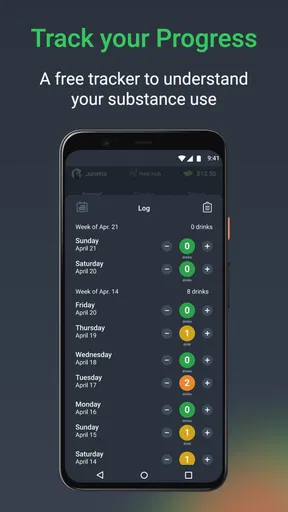
- Clear daily tools for tracking recovery progress and personal triggers.
- Encourages reflection through journaling and guided self-assessment exercises.
- Useful reminders can help users maintain routines and recovery goals.
- Private
- personal format makes it easier to record sensitive experiences.
- Can complement therapy or support groups between appointments and meetings.
Cons
- It is not a substitute for professional treatment or emergency support.
- Some features may require a subscription or in-app purchases.
- Recovery content may not suit every addiction or personal situation.
- Daily tracking can feel demanding during stressful periods or setbacks.
- Users may need to review privacy settings before entering sensitive information.
FAQs for Affect: Addiction Recovery
What is Affect: Addiction Recovery, and who is it designed for?
Affect: Addiction Recovery is a mobile app intended to support people working toward recovery from addiction. It may help users reflect on habits, track progress, learn recovery-focused information, and build healthier routines. The app can be useful for people at different stages of recovery, but it should be viewed as a supportive tool rather than a replacement for professional counseling, medical care, supervised treatment, or emergency assistance.
Can Affect: Addiction Recovery replace a therapist, doctor, or rehabilitation program?
No. Affect: Addiction Recovery is designed to complement a recovery plan, not replace qualified healthcare professionals or structured treatment. Addiction can involve physical and psychological risks, including withdrawal complications, relapse, and mental-health emergencies. Users should consult a doctor, therapist, counselor, or licensed addiction specialist for personalized guidance. If someone is in immediate danger, experiencing an overdose, or considering self-harm, contact local emergency services immediately.
What features can users expect when using the app?
The app focuses on practical recovery support through tools and content that can encourage self-awareness, consistency, and accountability. Depending on the version and platform, users may find progress tracking, reflective exercises, educational material, reminders, motivational guidance, or ways to record recovery-related goals. The exact features can change with updates, so it is worth checking the current store listing and privacy information before downloading.
Is my recovery information private when I use Affect: Addiction Recovery?
Before entering sensitive details, users should review the app’s privacy policy, data-safety section, and permission requests in the Google Play Store or Apple App Store. Recovery notes, personal goals, mood information, or usage data may be handled differently depending on the device and app version. Avoid sharing information you would not want stored online, use a secure device, and check whether account deletion and data-export options are available.
Is Affect: Addiction Recovery suitable for someone experiencing withdrawal or a crisis?
The app should not be used as the sole support during withdrawal, an overdose, severe cravings, suicidal thoughts, or another urgent crisis. Some forms of withdrawal can be medically dangerous and require immediate supervision. Contact a healthcare professional, addiction service, crisis line, or emergency service in your area. For routine recovery work, the app may provide helpful structure, but combining it with trusted personal and professional support is generally safer and more effective.


